What Is on the Truck
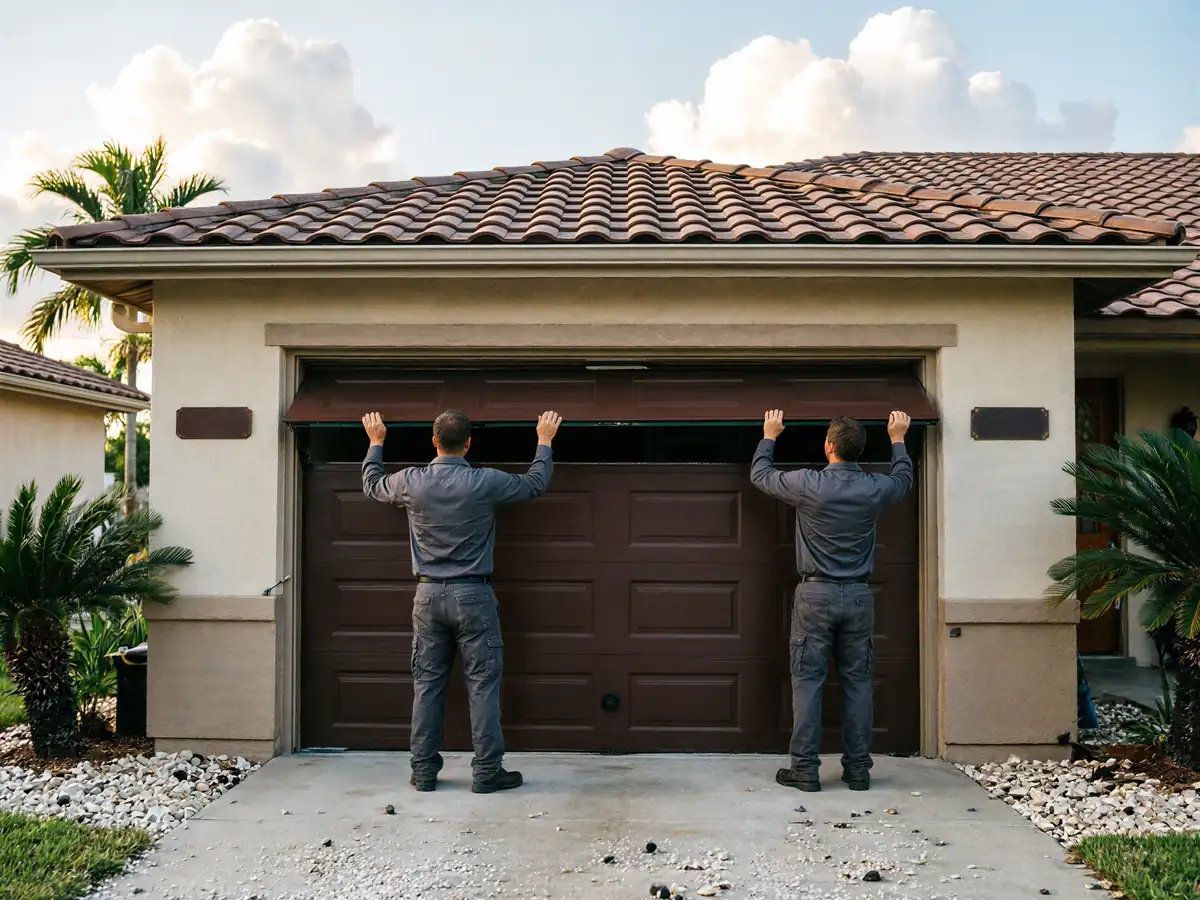
When a door jumps the track in North Lauderdale, the fix usually isn't a new track - it's the bracket holding the old one. Most houses here went up around 1978, and the sheet-metal track brackets from that era were lag-bolted straight into jamb studs that have since shrunk and shifted with decades of South Florida humidity. The bracket works loose, the track racks out of parallel, and the rollers walk right out of the channel, usually on one side first.
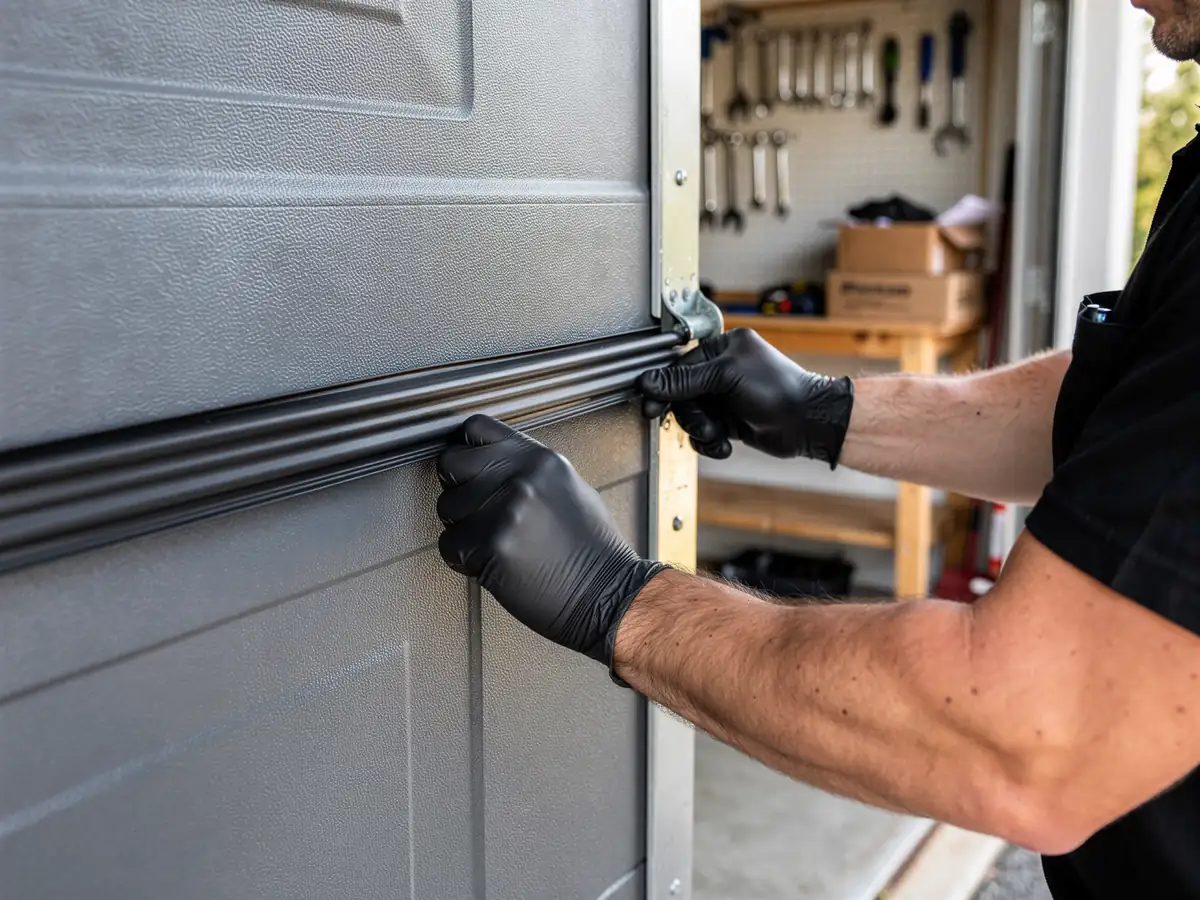
We carry replacement track sections in the common residential widths, lag screws and jamb brackets in a few gauges, and both nylon and steel rollers, because a lot of these doors still have the stamped-steel rollers that came standard on builder-grade doors from that period. We also carry a level and a straightedge, because an off-track call almost never means just rehanging the door - it means figuring out why the track moved in the first place, which starts with checking whether the opening itself is still square.
What the Fix Involves
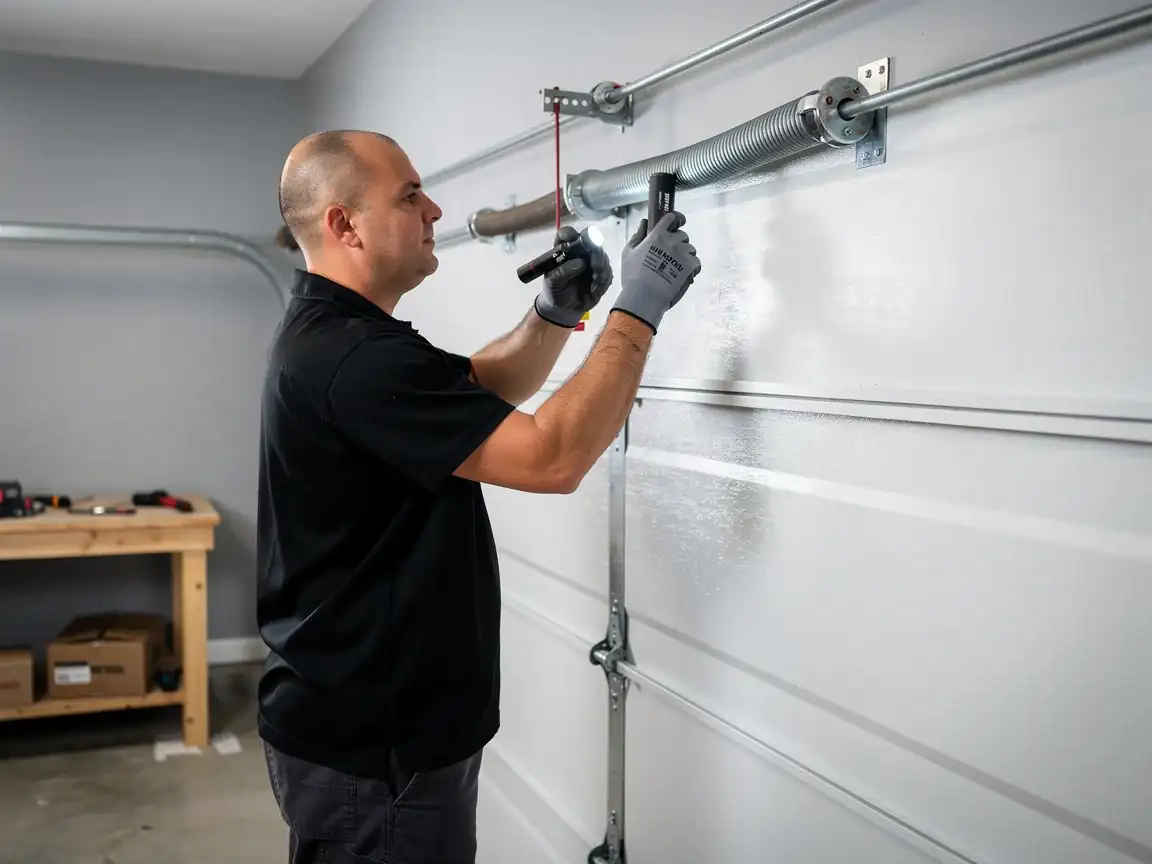
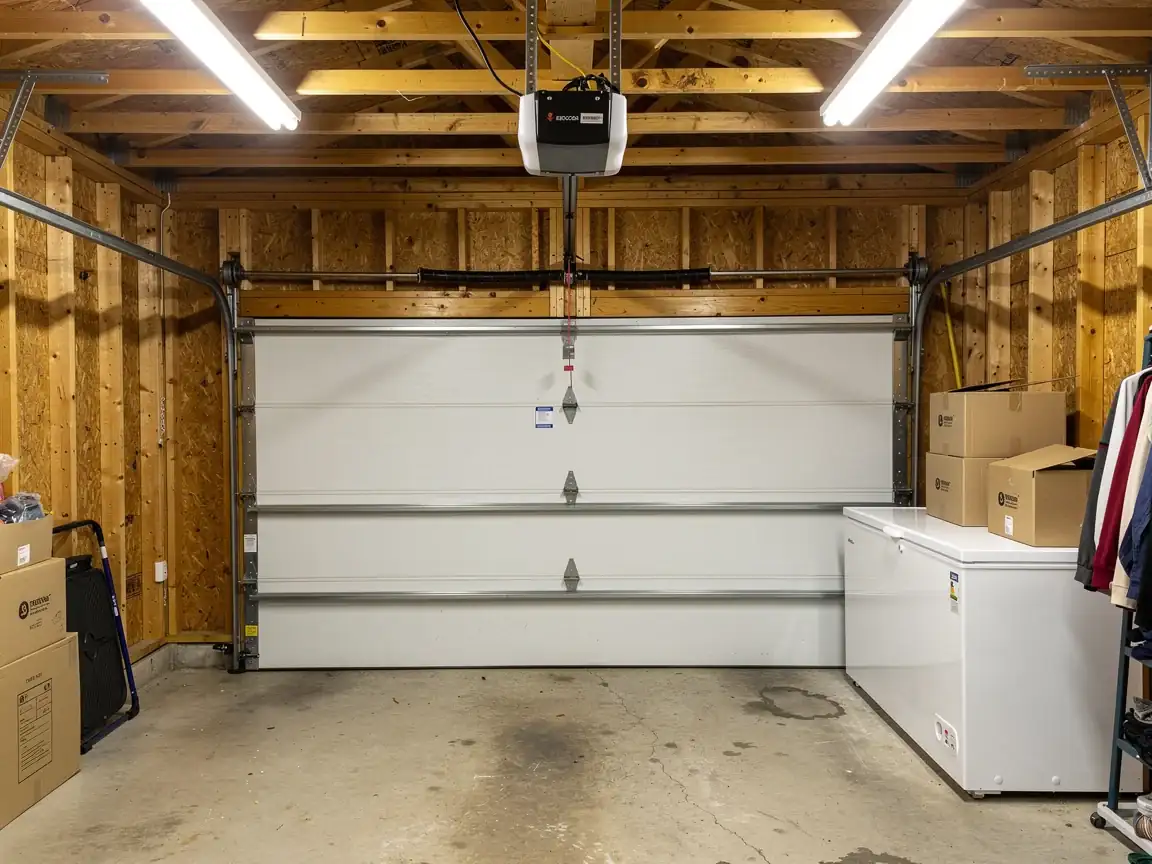
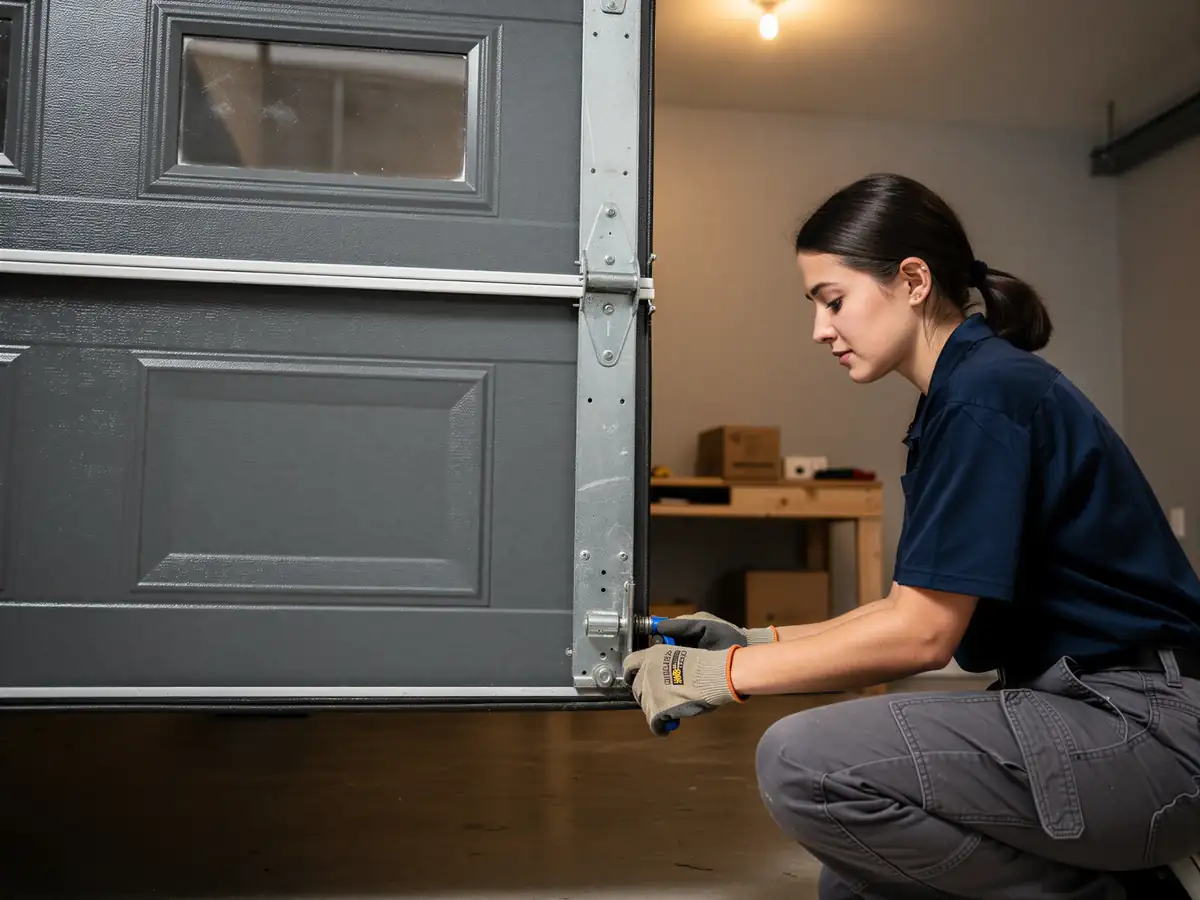
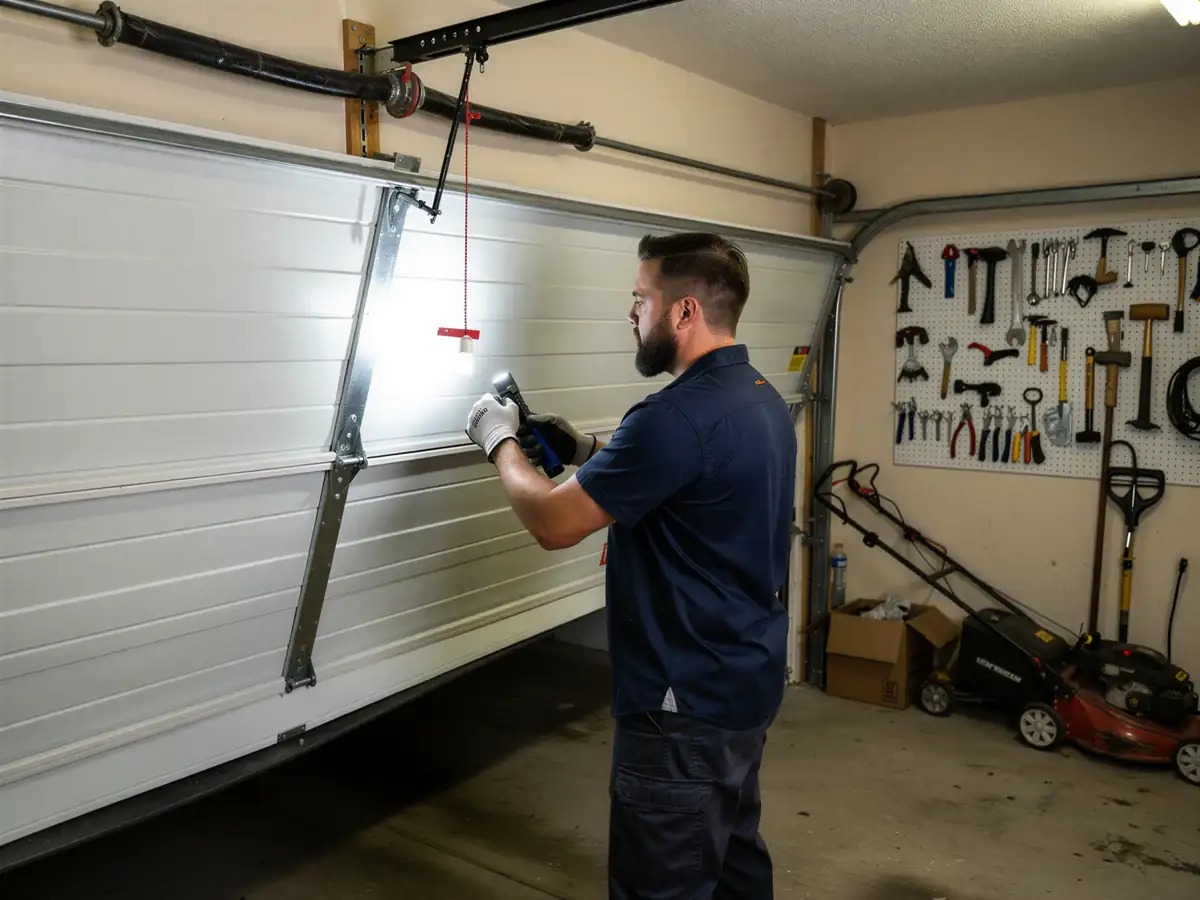
First we lower the door manually and release the opener so nothing fights us while we work. Then we check both tracks against the jamb with a level - on a lot of these 1970s-era frames, the vertical track has pulled away from the stud line by a quarter inch or more near the bottom bracket, which is enough to let rollers climb out under spring tension.
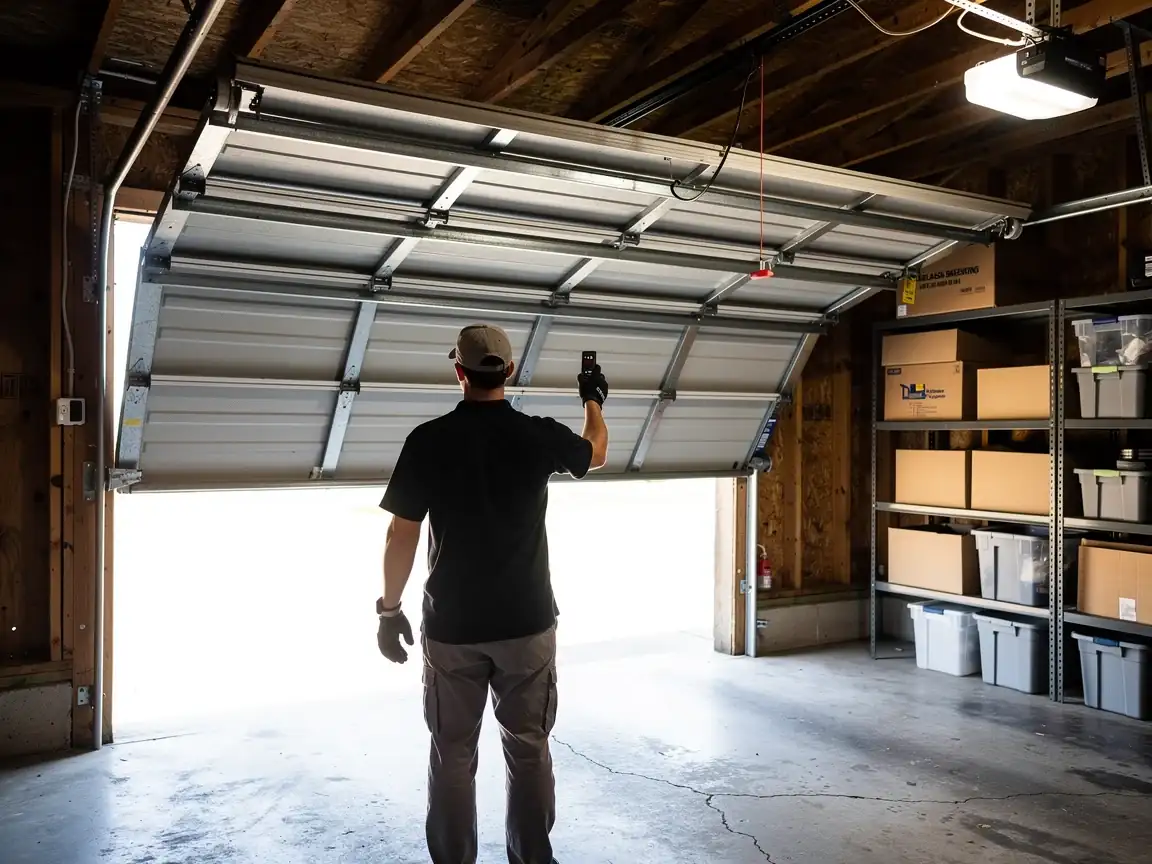
If the track is just bent or loose, we re-anchor the bracket into solid wood, straighten or swap the bent section, and reset the rollers one at a time, checking that the door rides true from floor to header before we reconnect the opener. If the rollers themselves are worn - flat spots, cracked nylon, rust on the stem - we replace those too, since a straight track with a bad roller will walk right back off within a few weeks. We test the door through a full open-close cycle under power before we call it done, because a door that looks seated can still bind partway up.
Why This Fails Locally
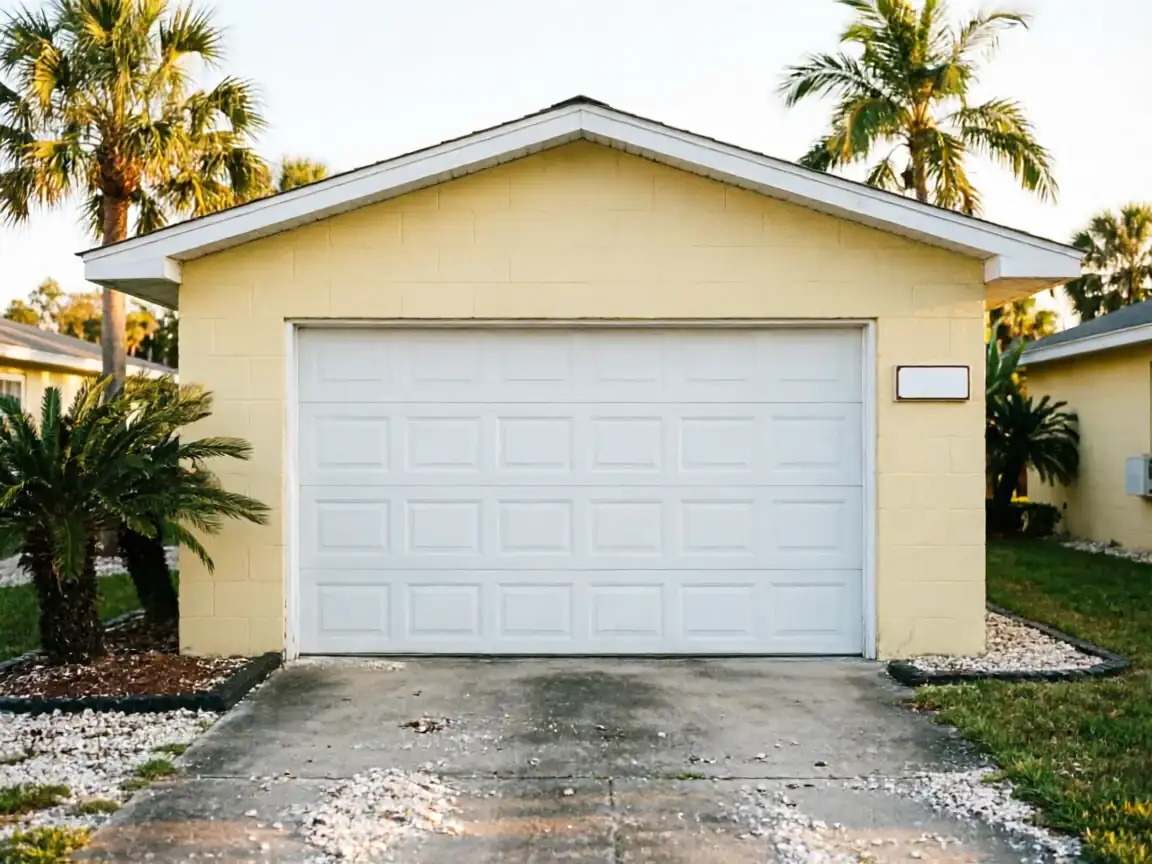
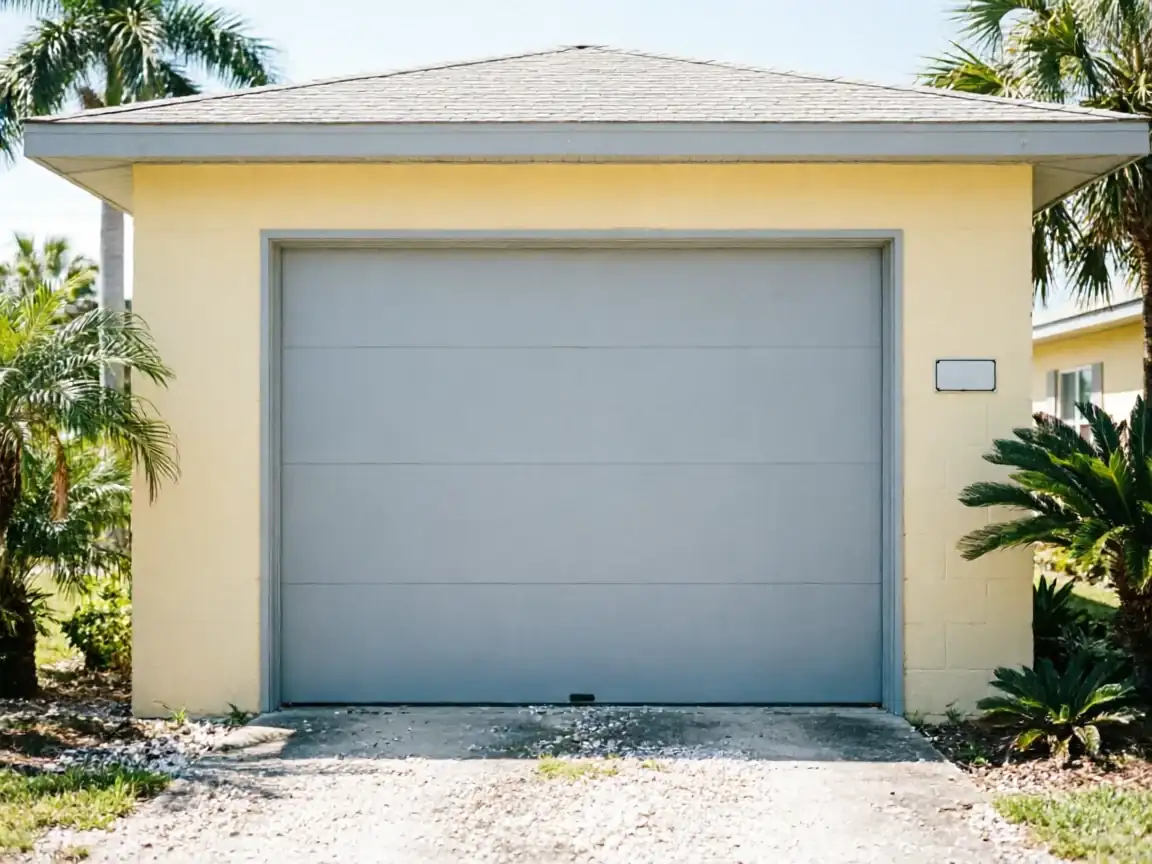
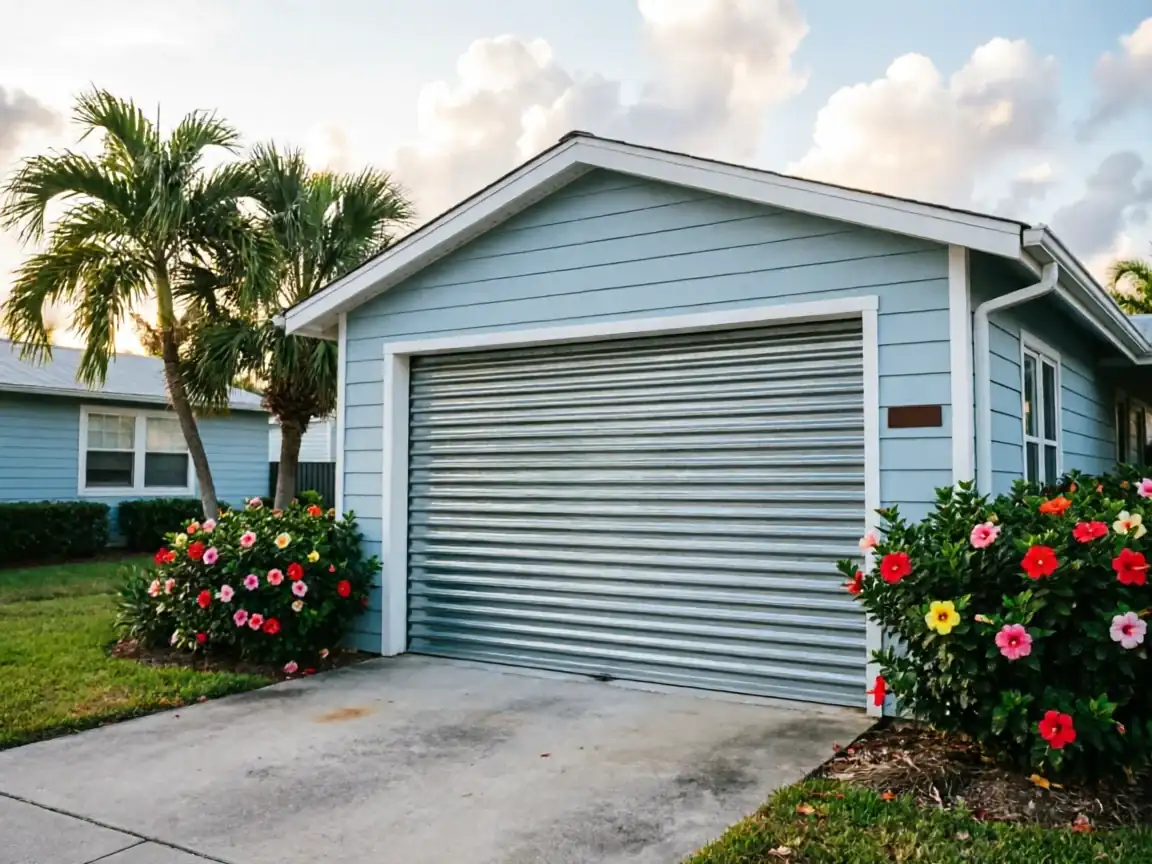
The housing stock across this part of the service area runs mostly 1960s and '70s construction
And North Lauderdale's median build year sits right at 1978 - old enough that most of these garages still have their original track hardware, or a direct swap from decades ago using the same light-gauge brackets. That hardware wasn't built for 45-plus years of expansion and contraction in a mild, humid climate, and it shows up as slow bracket creep rather than sudden failure, until one day the door jumps.
It's not a heat problem the way it might be inland
This region sits in a mild temperate band without the big seasonal swings that crack wood framing outright. The issue here is steady moisture working on steel fasteners and softening the wood around them over a long stretch of years. A door that's run smoothly for two decades can start walking off-track in a single season once a bracket finally lets go.
The Cost of This Job
We don't have a flat number to quote here, since every off-track call is different depending on whether it's one bent section or a bracket that needs re-anchoring into fresh wood, and whether the rollers need replacing too. What we can tell you is that a straightforward re-track and bracket fix costs a lot less than what happens if the door keeps running off-track and a panel gets bent or a cable jumps the drum - that's a bigger repair, sometimes a full section replacement.
With North Lauderdale's median household income at $63,423, we try to fix what's fixable rather than push a full door replacement when the track and rollers are the actual problem. We'll tell you straight if the track is salvageable before we quote anything bigger.
What Can Go Wrong
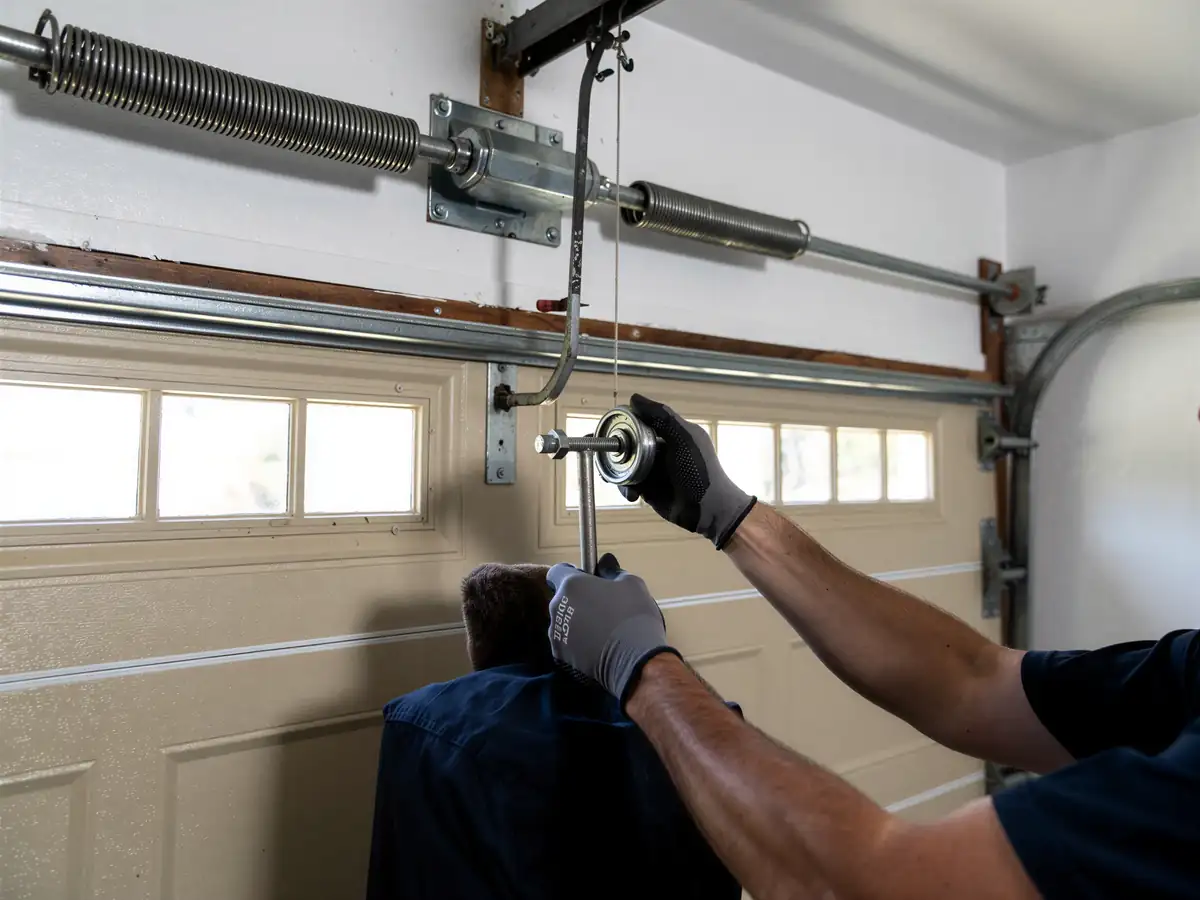
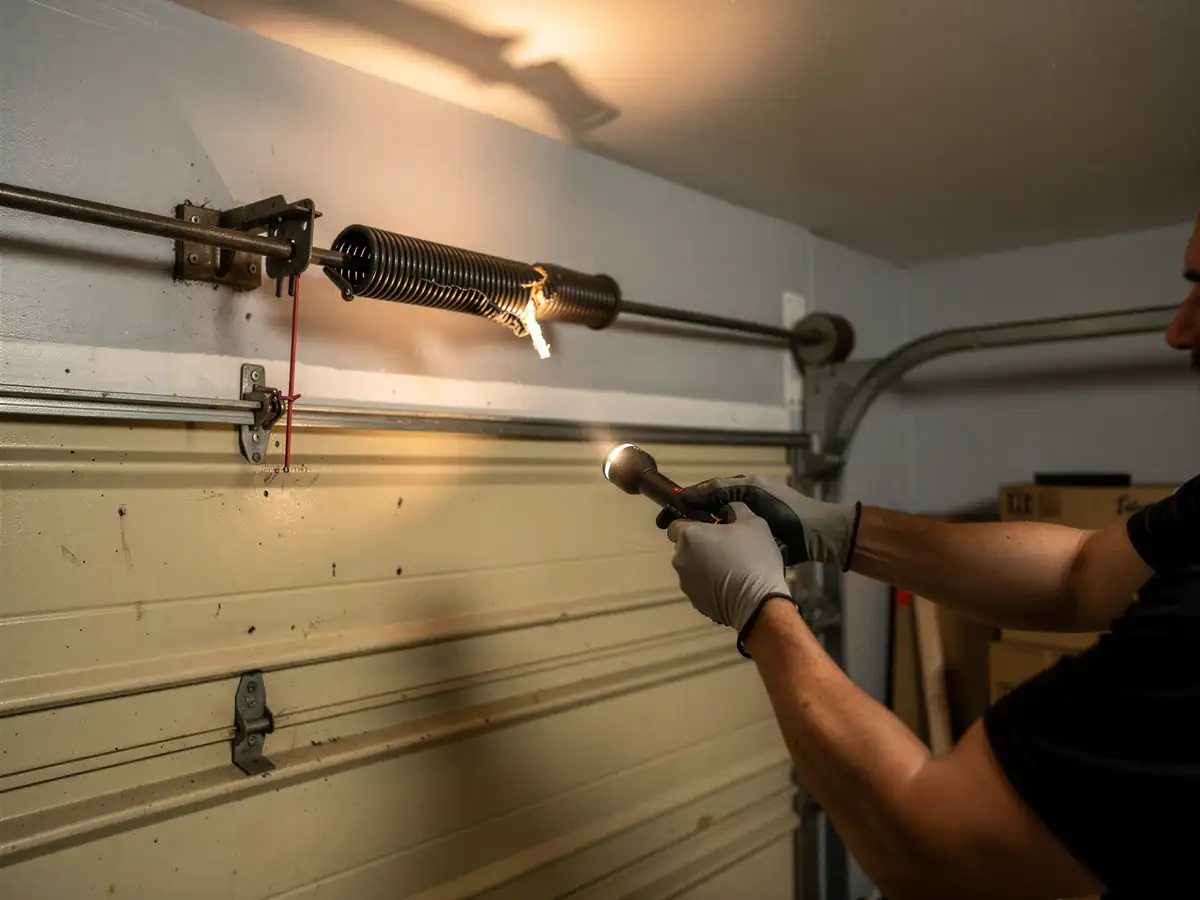
An off-track door under spring tension is not a safe DIY fix - if a cable has also jumped the drum, trying to force the door back onto the track can snap the cable or drop the door unexpectedly. We won't push a door back into the channel if the opening itself is out of square; in a handful of older North Lauderdale homes we've seen, the jamb has shifted enough that the track needs a shim plan, not just a bolt-down, and that's a longer job than a same-day reset.
One limitation worth saying plainly: if the track has been bent sharply rather than just pulled loose, we replace the section rather than try to bend it back. A straightened track can look fine and still bind under load a few weeks later, and that just means a second call for a problem we could have fixed right the first time.