What Can Go Wrong
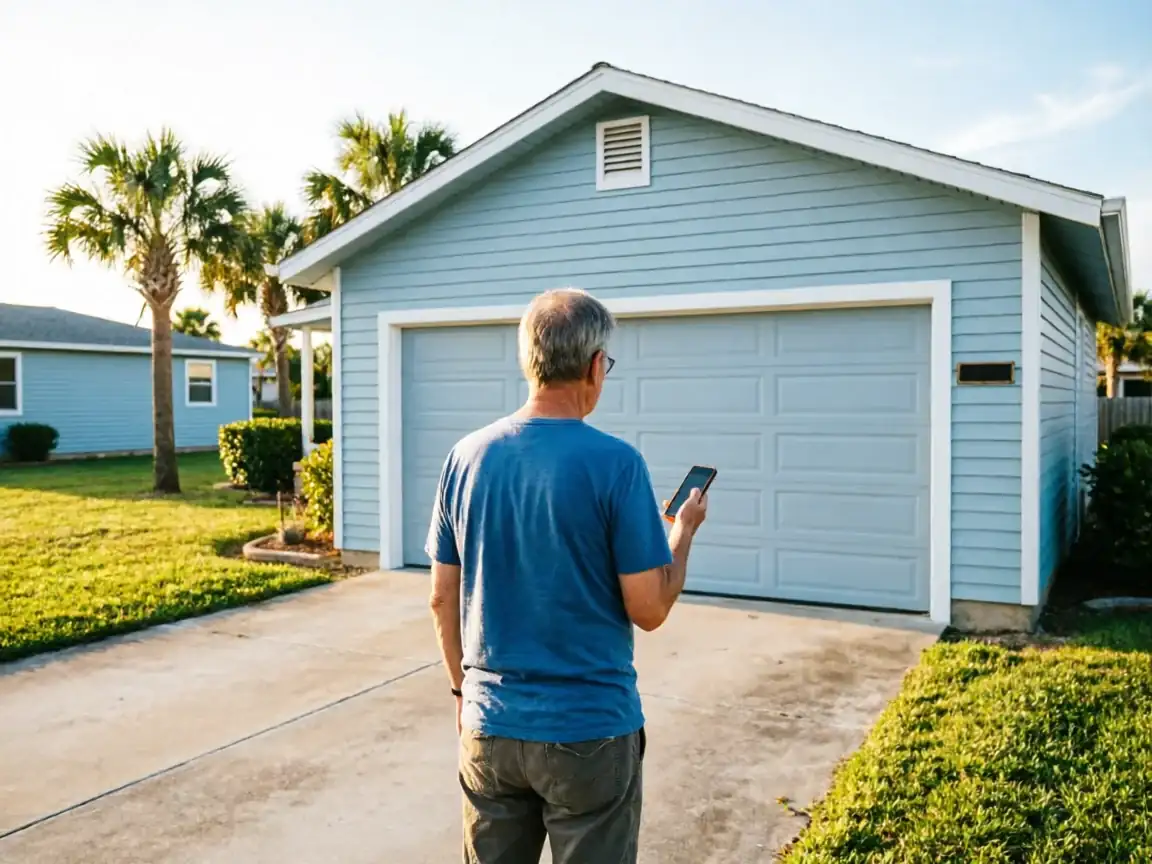
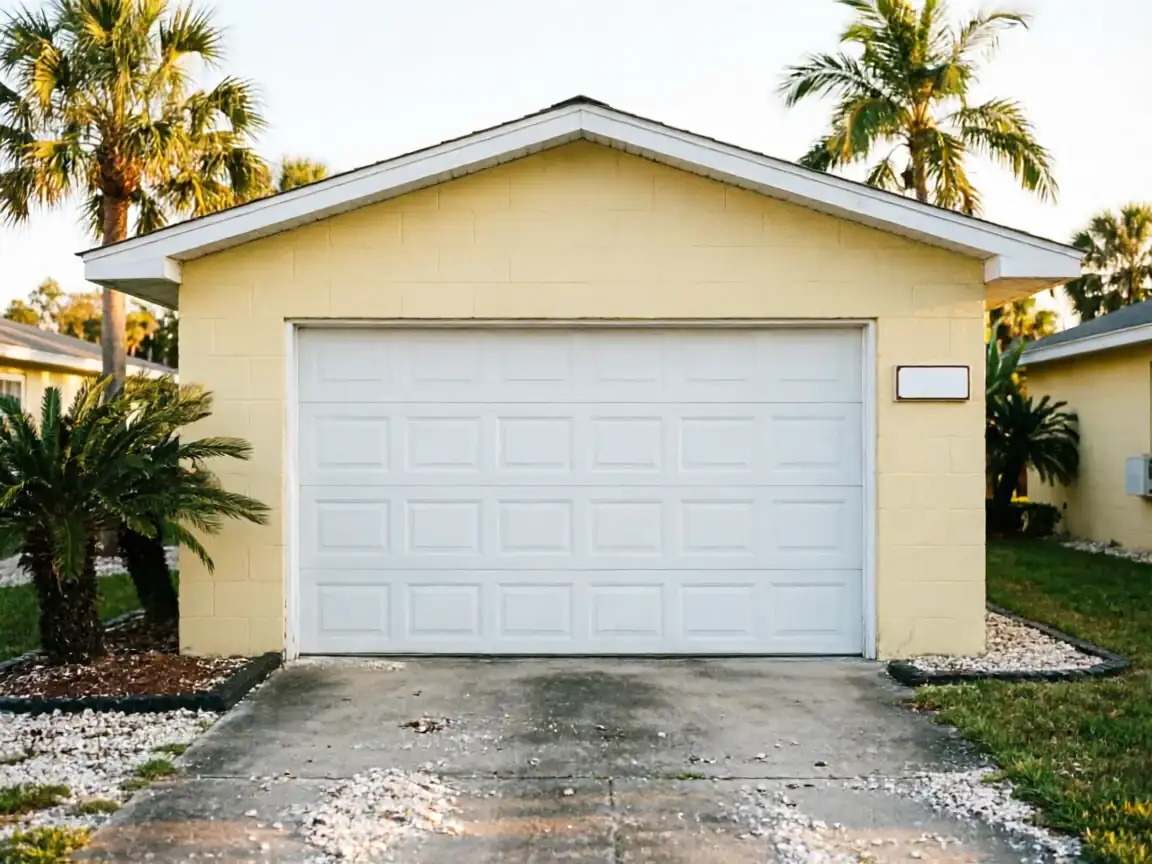
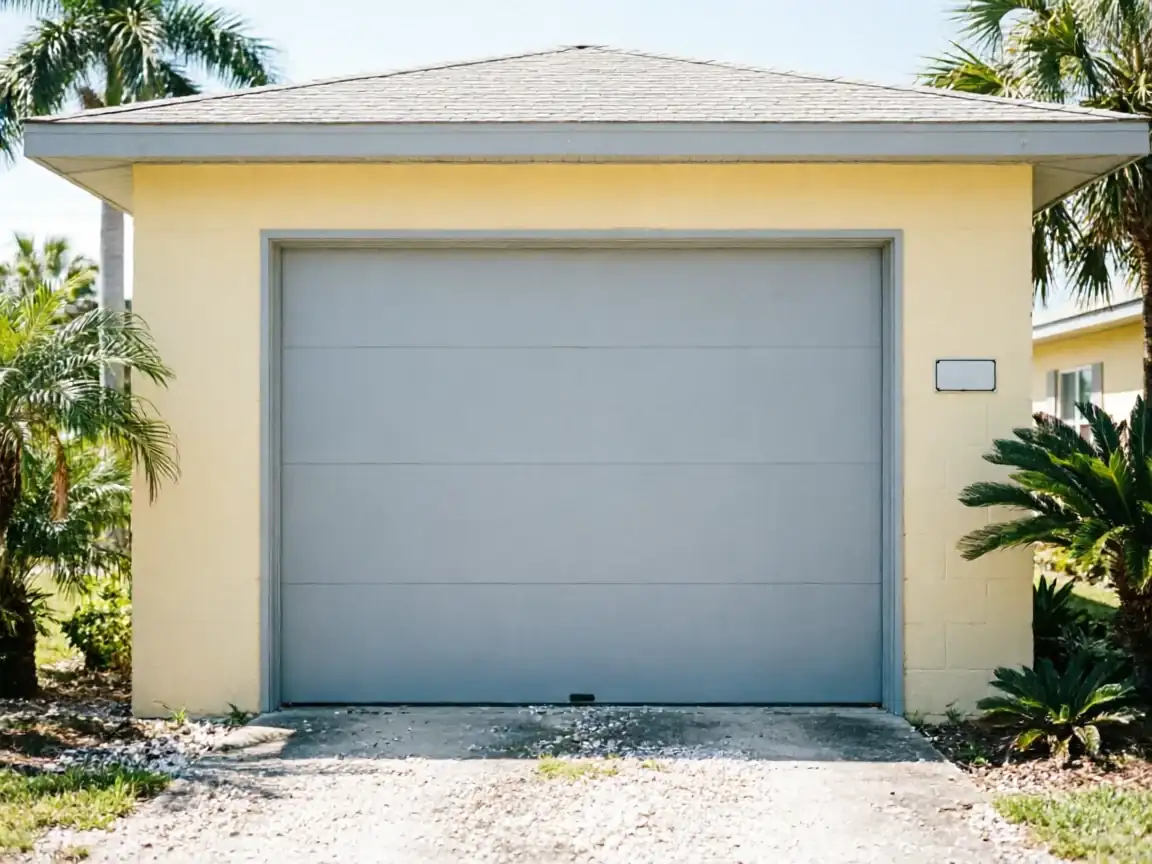
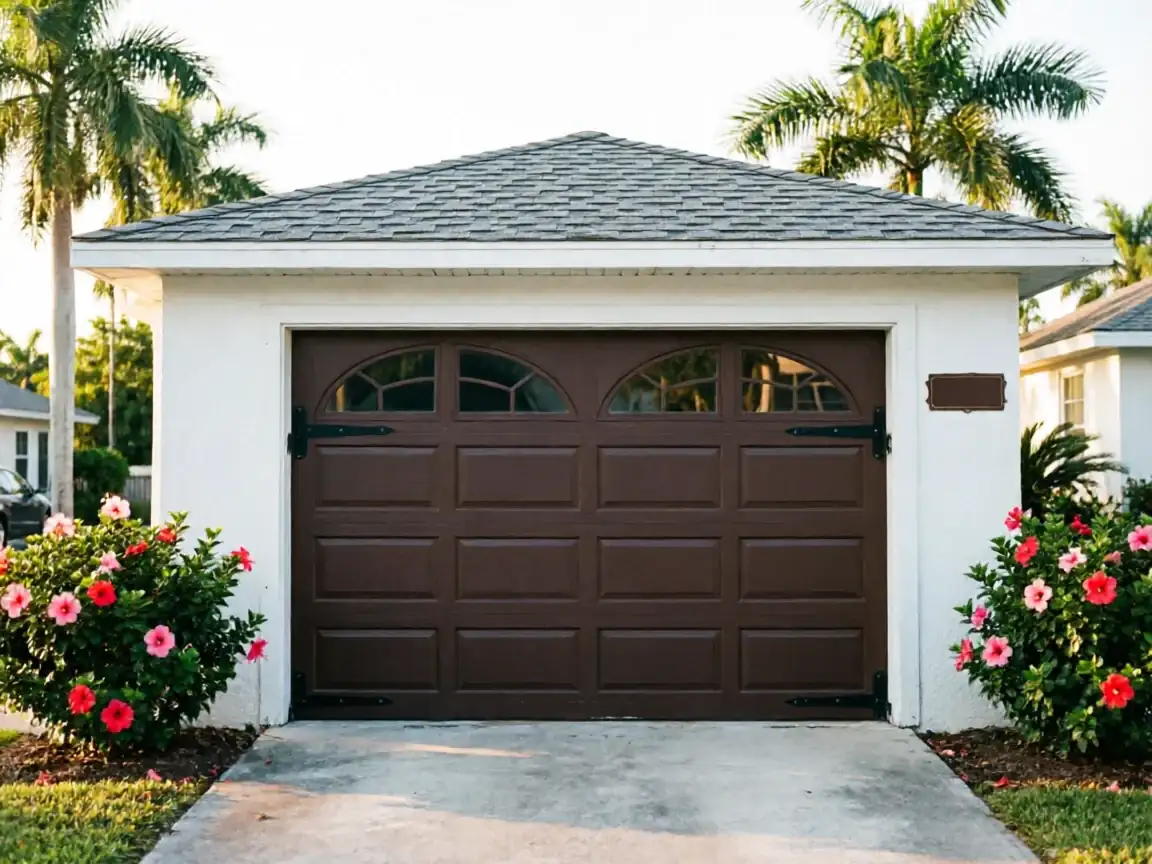
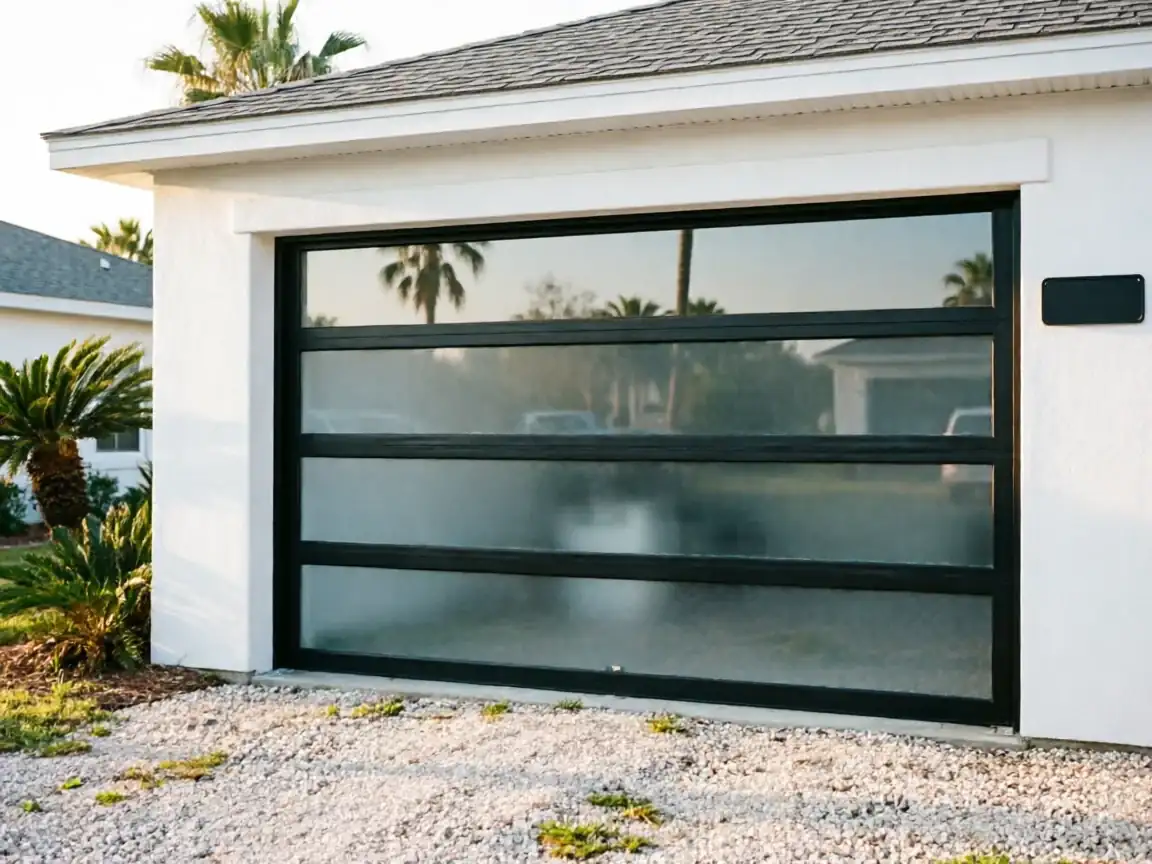
The four-mile drive from Coral Springs to Parkland matters less for travel time than for what's waiting at the end of it. Parkland's housing stock runs newer than most of the towns we cover - median year built is 2005, which puts a large share of these garages on post-code openers, steel-reinforced sectional doors, and factory torsion springs sized for heavier insulated panels rather than the thin single-layer doors common in older neighborhoods nearby.
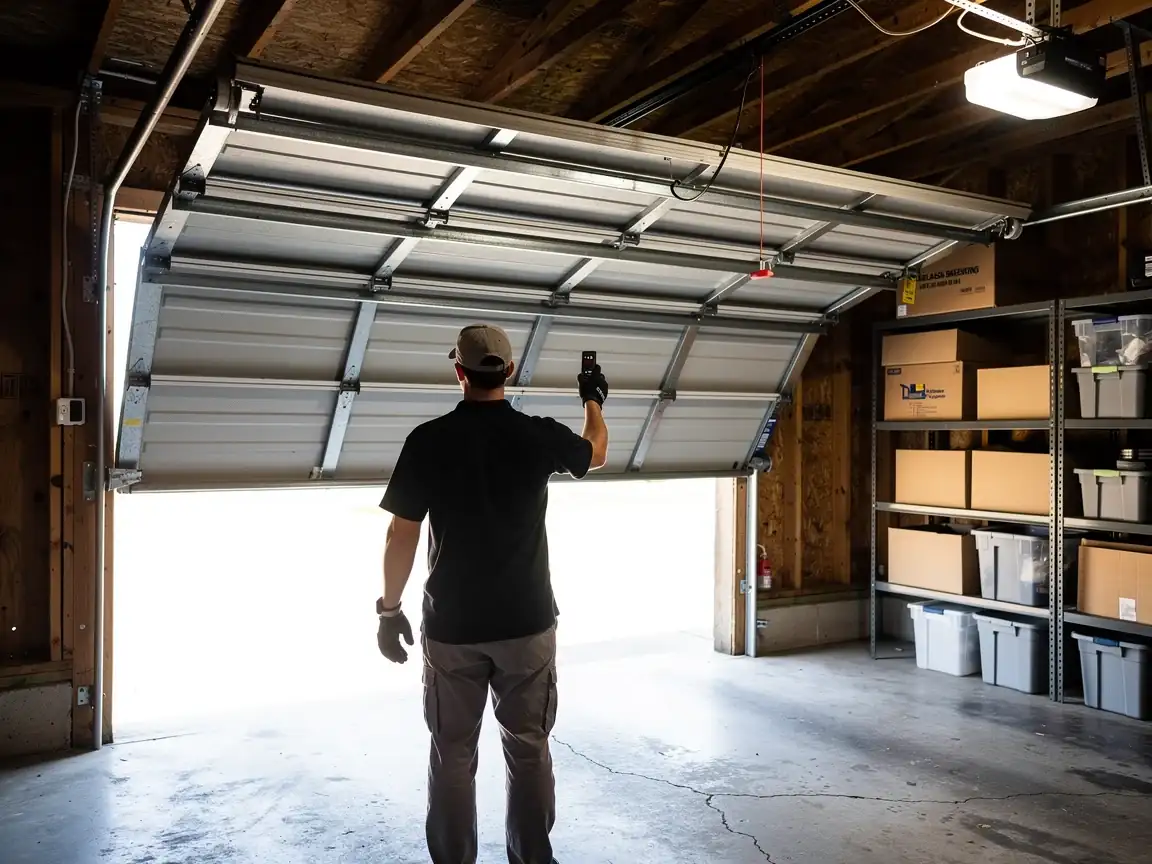
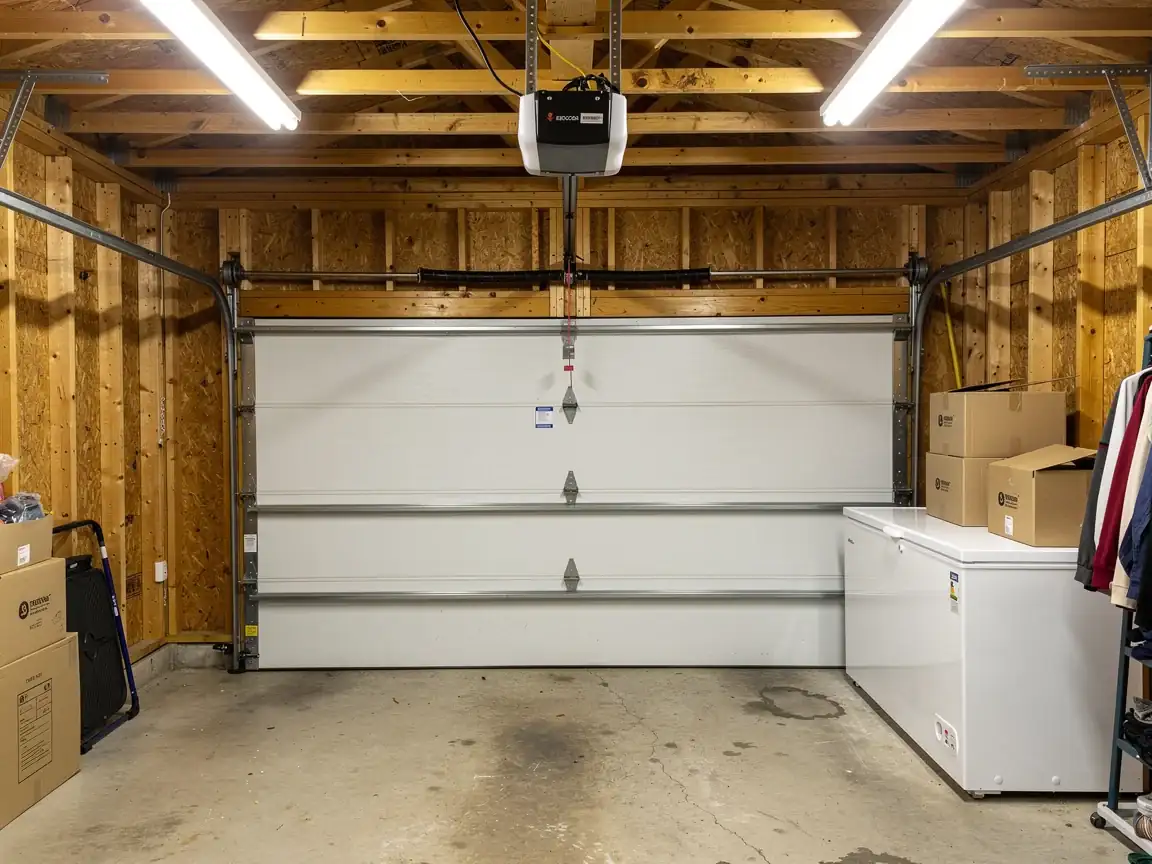
What fails here tends to be different from what fails in a 1970s-era house. We see more opener logic board faults, photo-eye sensor misalignment from garage shelving or storage bikes knocked into the beam path, and worn nylon rollers on doors that get cycled daily by households with multiple cars and no on-street parking. Torsion springs do fail, but usually from cycle count rather than age-related metal fatigue, since the hardware itself hasn't had decades to rust or seize.
South Florida's mild, humid climate plays a role too - it's easier on steel than a freeze-thaw climate, but the same humidity speeds corrosion on unlubricated cables and hinges faster than owners expect from a newer door.
How Long It Takes
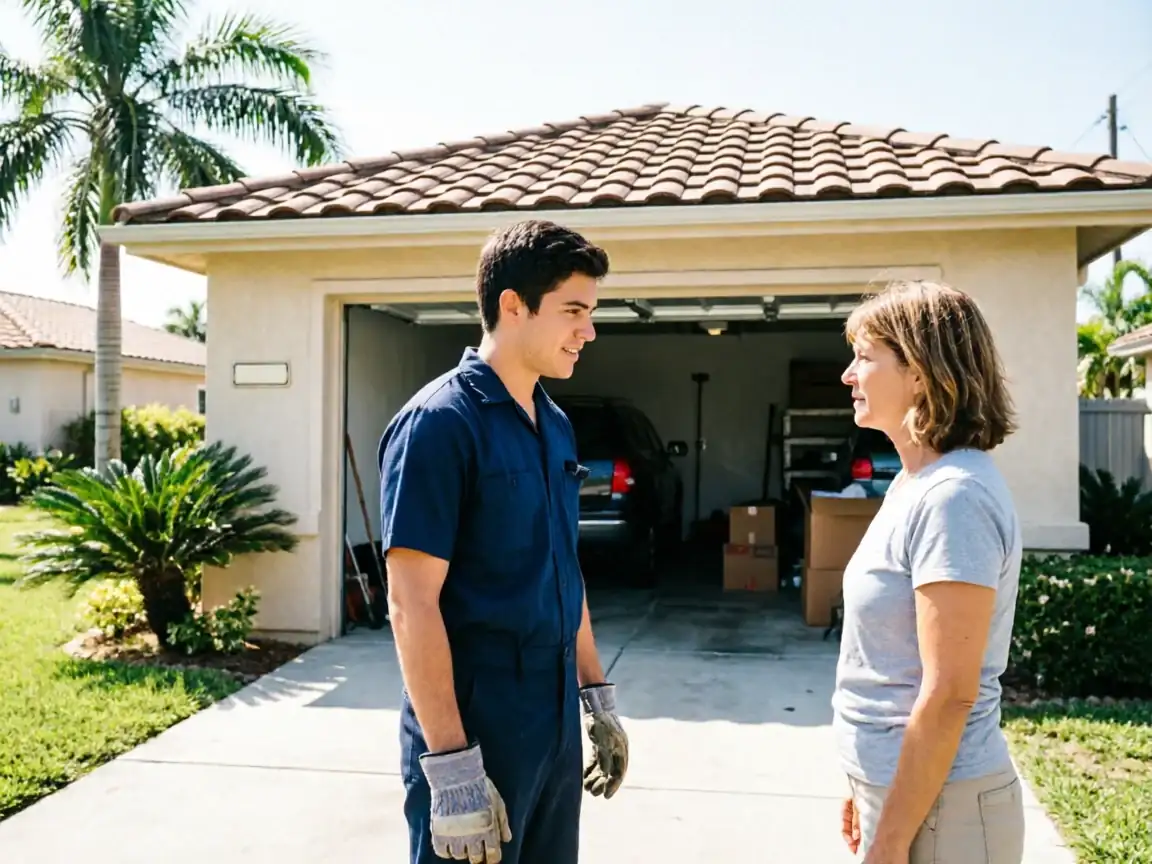
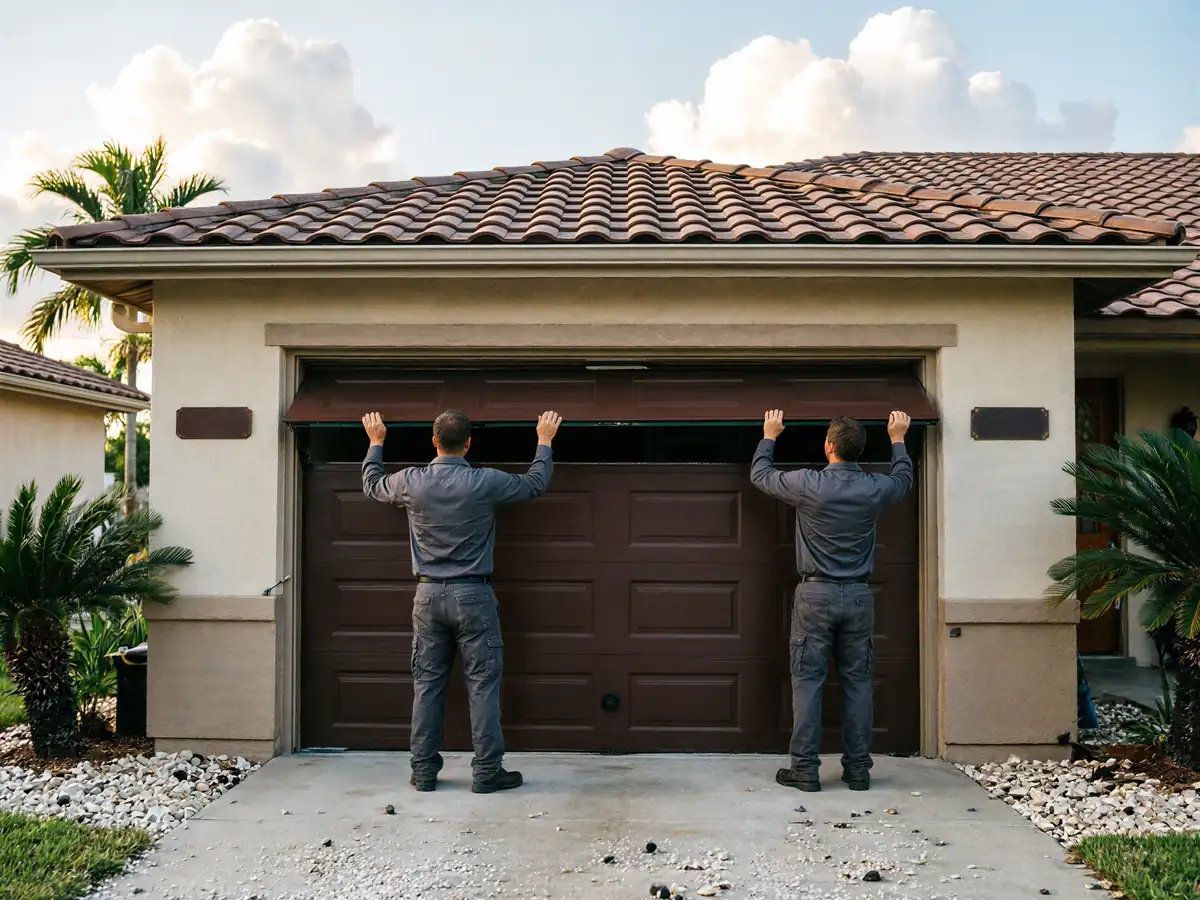
A straightforward call - a broken spring, a bad sensor, a slipped cable - is usually a single visit once we're on-site, same as any job in the service area. The four miles from Coral Springs doesn't change the repair time; it changes how the day gets scheduled, since we're routing from the shop rather than sitting in a Parkland yard.
Where Parkland jobs sometimes run longer is on the opener side. Newer homes here are more likely to have smart openers with battery backup or camera integration, and diagnosing a circuit fault on one of those takes more bench time than swapping a 20-year-old chain-drive unit. If a part isn't on the truck, that's a return trip, not a same-day fix - we'd rather tell you that up front than guess and get it wrong.
What the Fix Involves
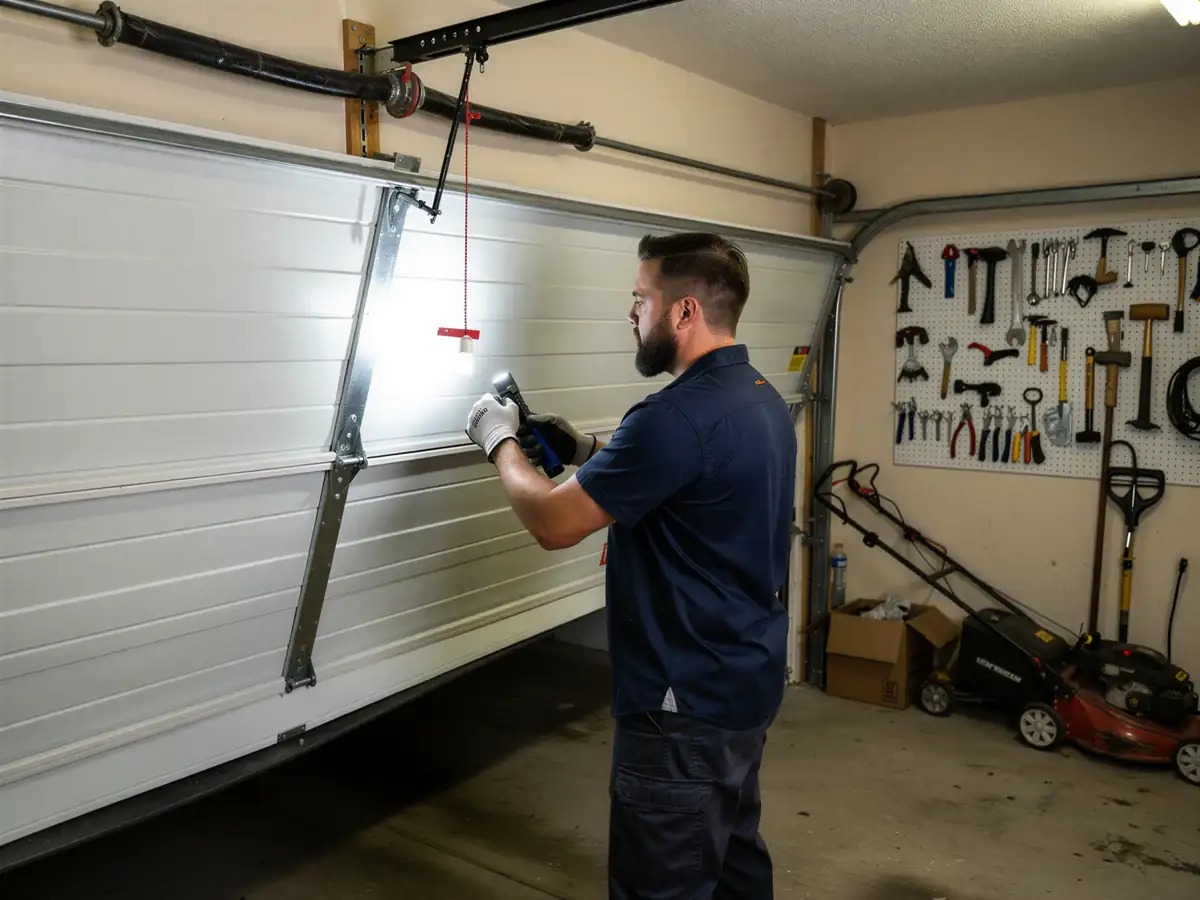
On a door built to 2000s-era specs, the fix usually starts with the opener and sensors before we even touch the spring
Because newer openers throw error codes that point straight at the actual fault - something older units just don't do. If the complaint is "door won't close," the photo-eye alignment gets checked first, since misaligned sensors are the single most common no-close call on houses this age.
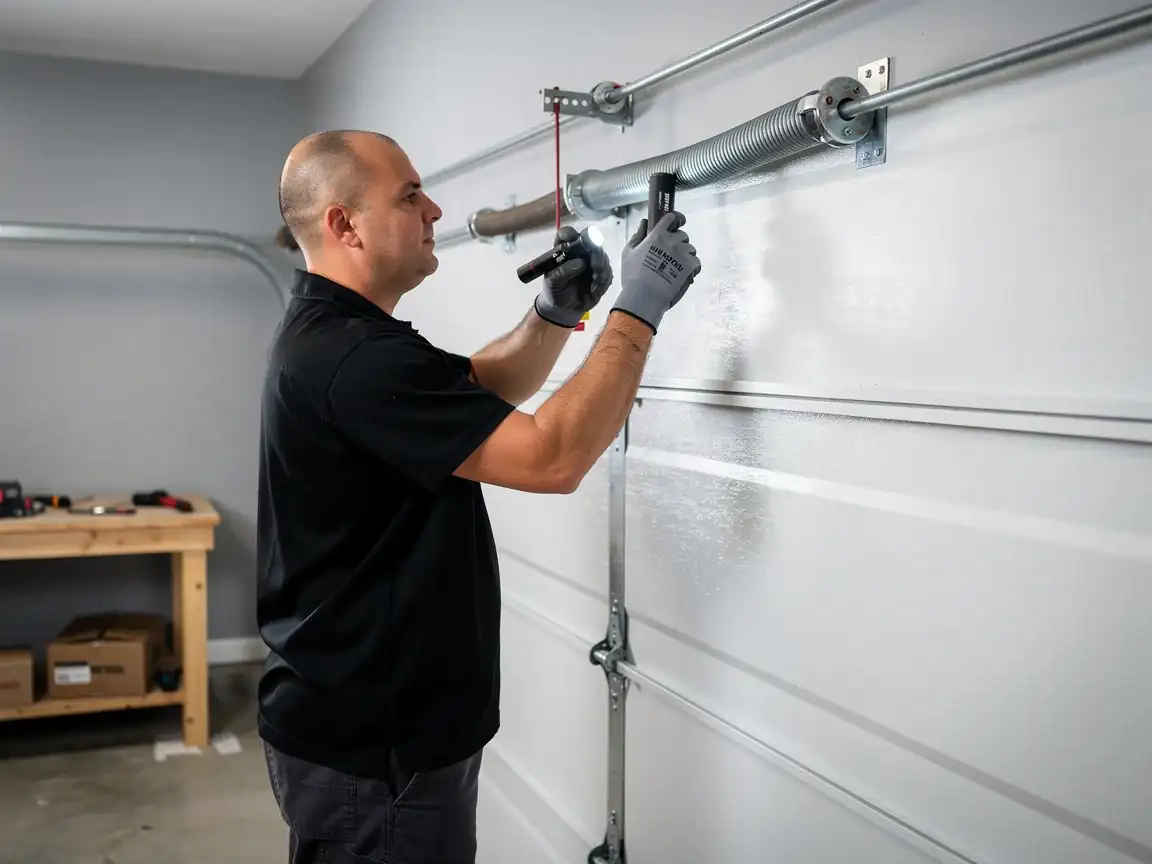
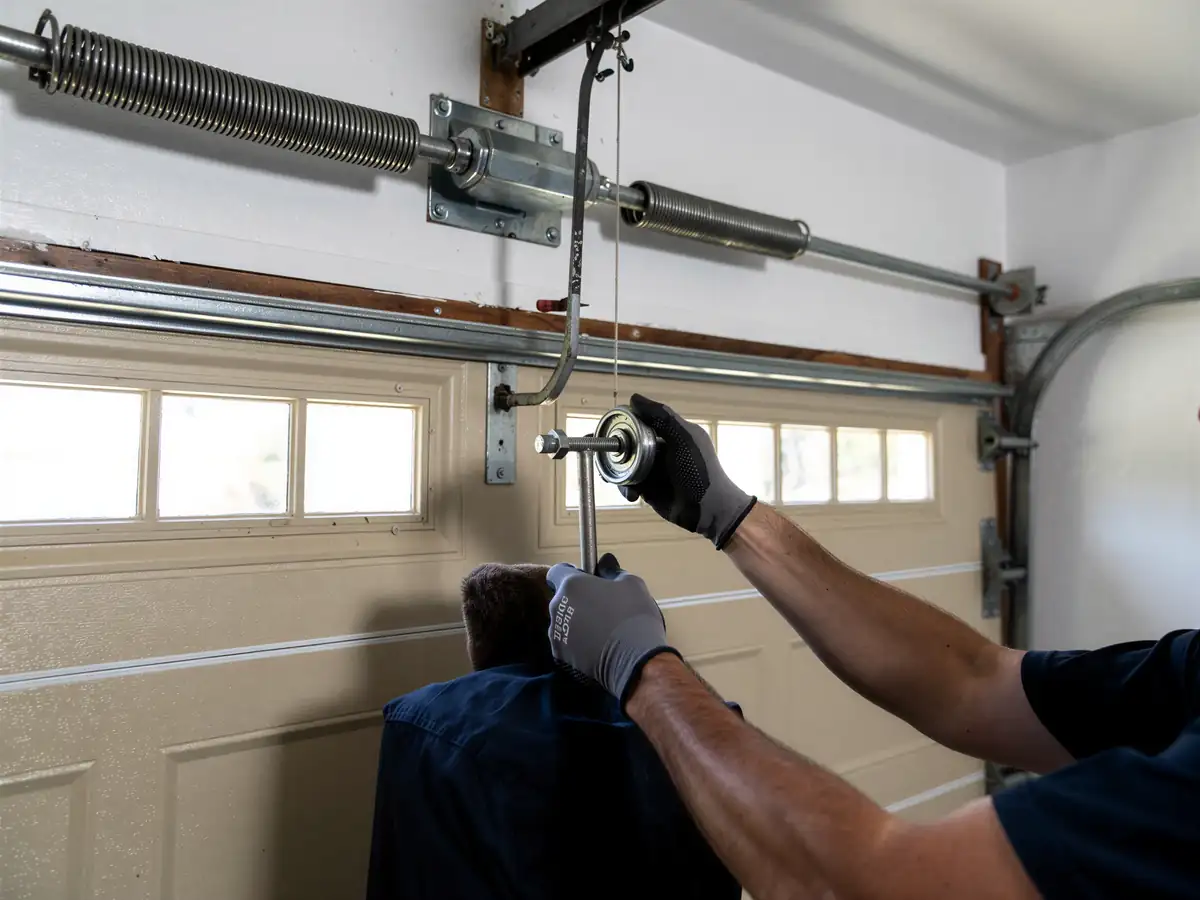
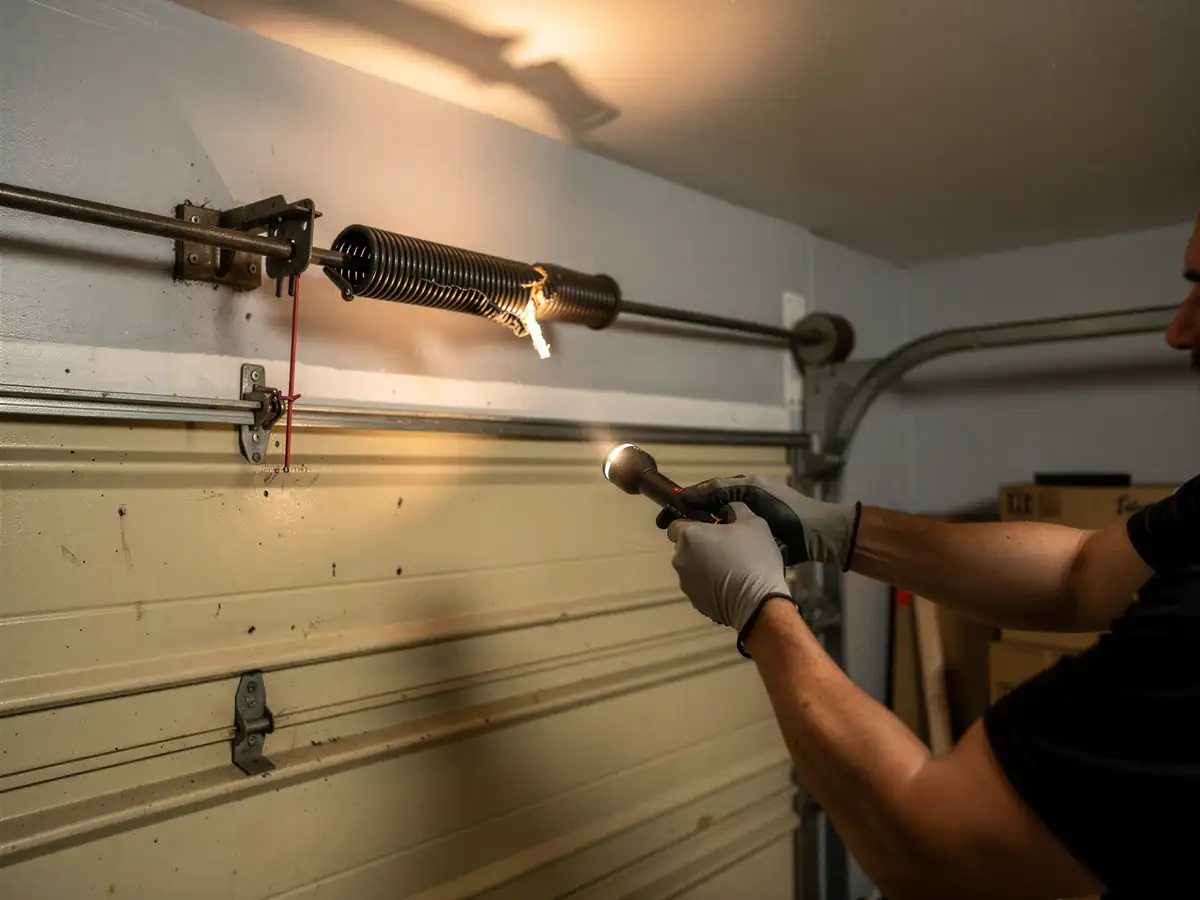
For a broken torsion spring, we match the wire gauge and wind to the door's actual weight
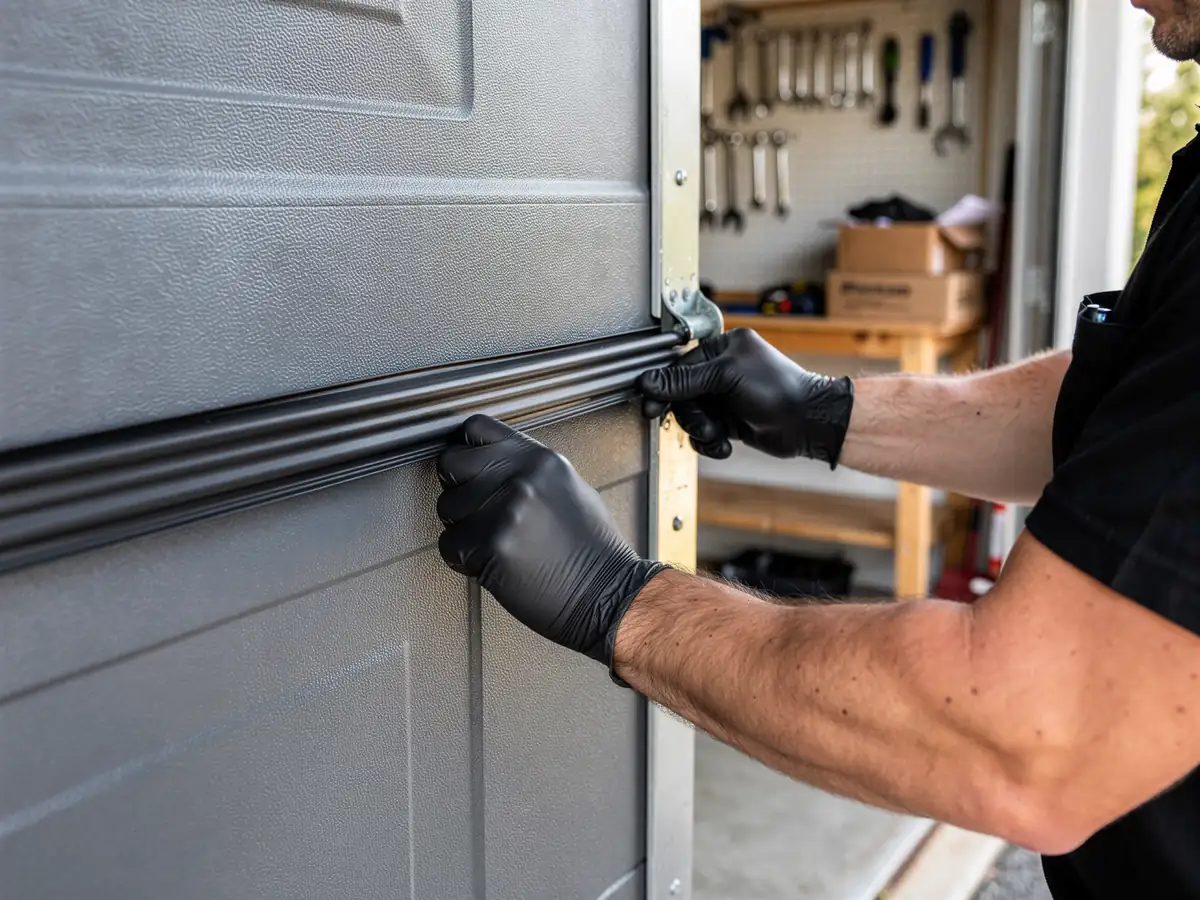
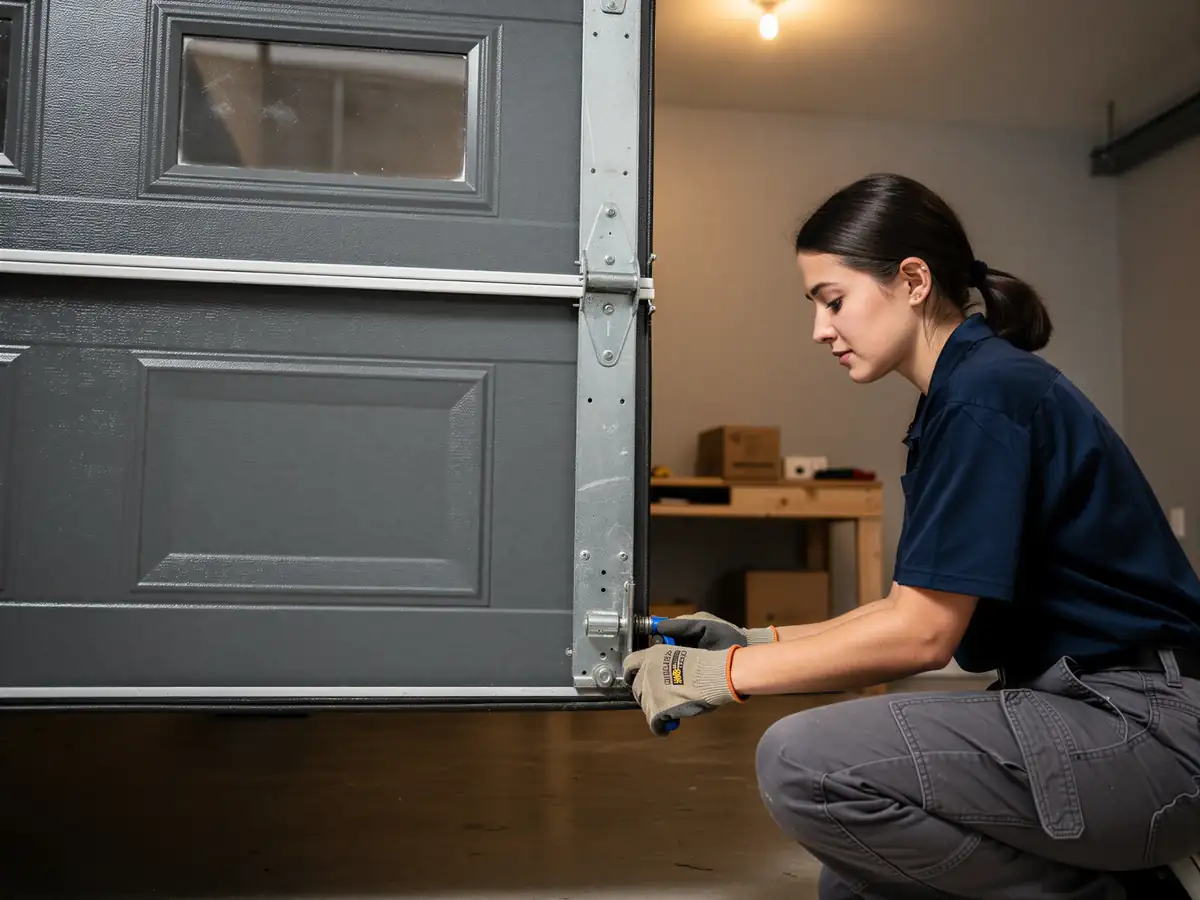
Insulated steel doors common in newer Parkland construction run heavier than the hollow single-panel doors in older housing stock, and the wrong spring size on a heavier door either won't lift it or will shock-load the cable within a season. Track and roller work is usually cosmetic by comparison on a door this age - bent track from a car bump, not decades of rust.
What Is on the Truck
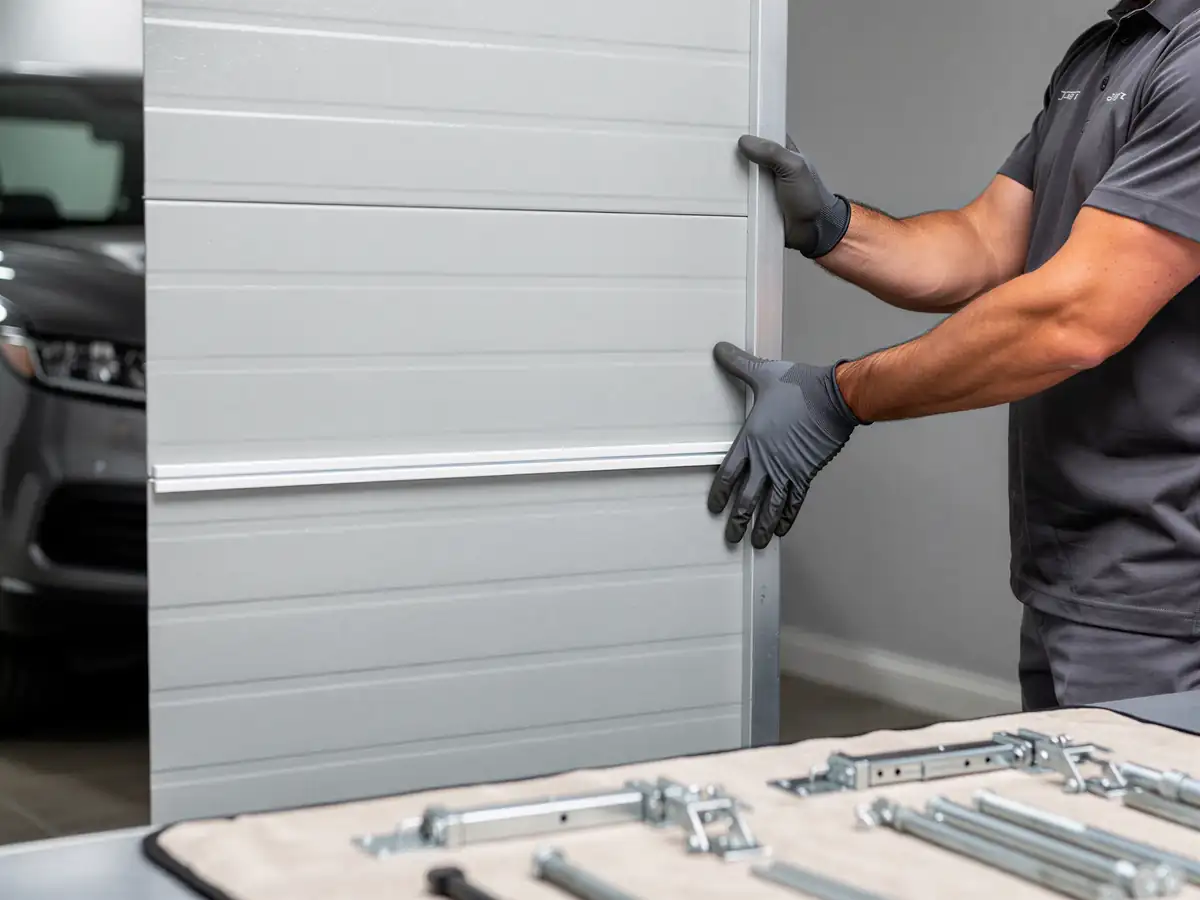
The truck carries torsion springs across the common residential sizes, standard rollers and cable, and a stock of photo-eye sensors and logic boards for the opener brands we see most often on newer installs. That covers the bulk of what goes wrong on housing built after 2000.
What it doesn't carry is every proprietary smart-opener board on the market. If a door runs a less common integrated system - tied into a home automation setup, for instance - the exact board may need to be ordered, and that's a second trip. We'd rather say that plainly than promise a same-day fix on a part we don't have in hand.
The Cost of This Job
We don't post a flat number here because the spread between a sensor realignment and a full opener board replacement is wide, and guessing at it before seeing the door does nobody any favors. What we can tell you is what drives the cost on a Parkland job specifically: newer insulated doors need heavier-rated springs than older hollow-panel doors, which costs more in parts, and a smart opener repair runs higher than a basic chain-drive swap because the board itself costs more.
Parkland's median household income sits well above the broader service area's $68,424 figure, and we've found that translates to more owners choosing full opener replacement over a patched repair when the unit is older - it's often the better long-term call, not just the pricier one. We'll always tell you when a repair is the cheaper, sounder option instead.